
Ancient Egypt Wall Art | Akhenaten & The Amarna Period
$49.00+
Akhenaten & The Amarna Period | Ancient Egyptian Relief | Egypt Wall Art
By Patricia Mezzina
Wildlife & Travel Photographer
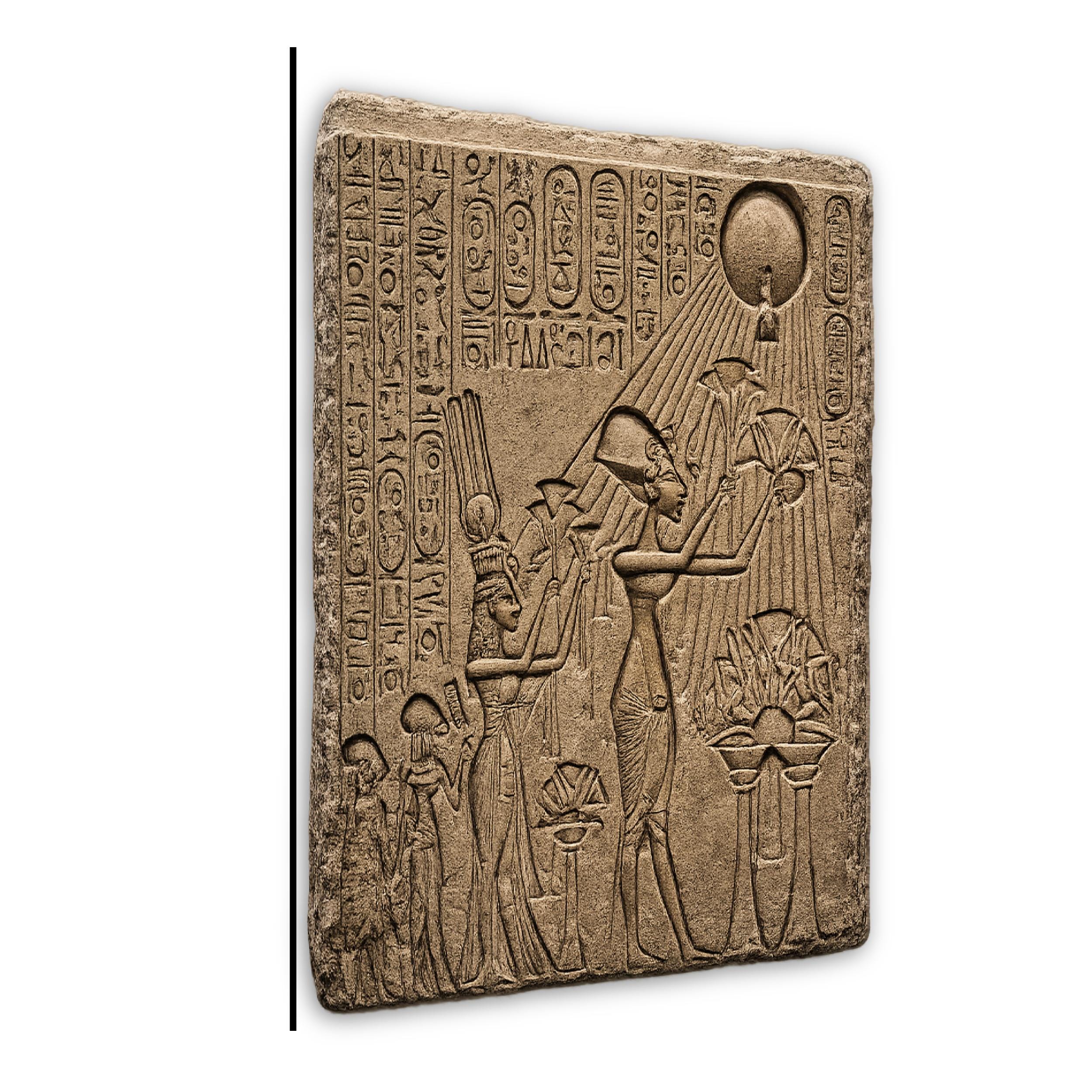
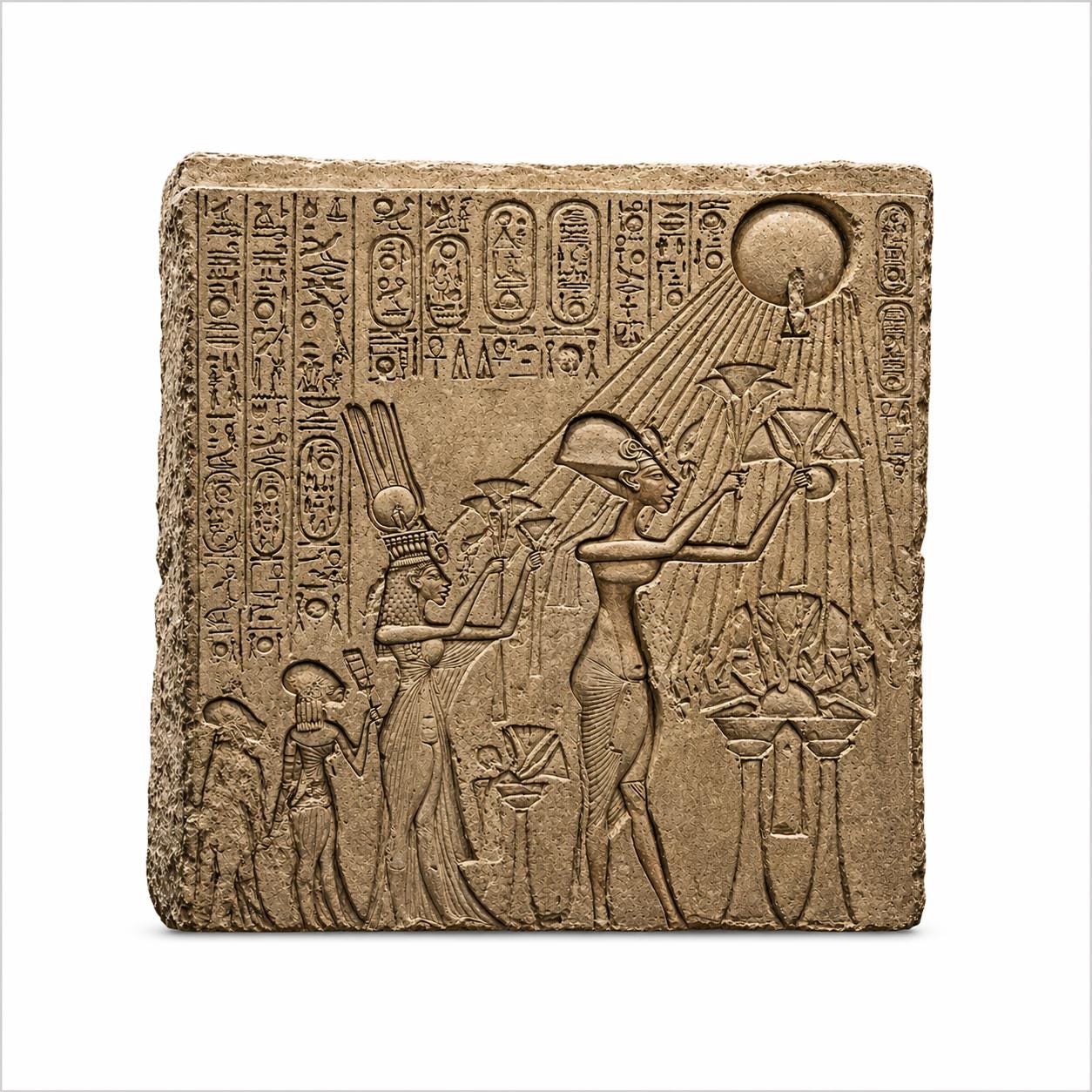
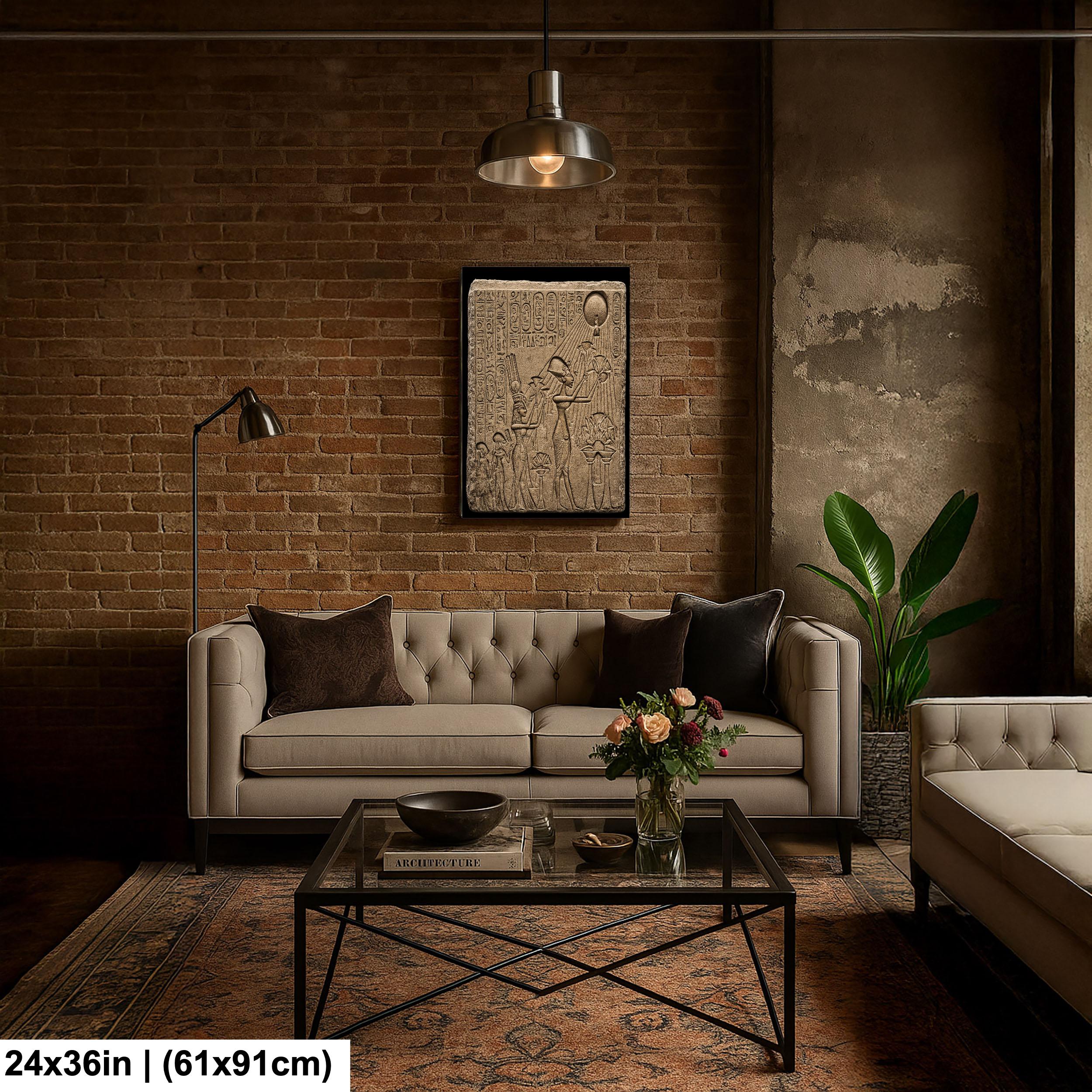
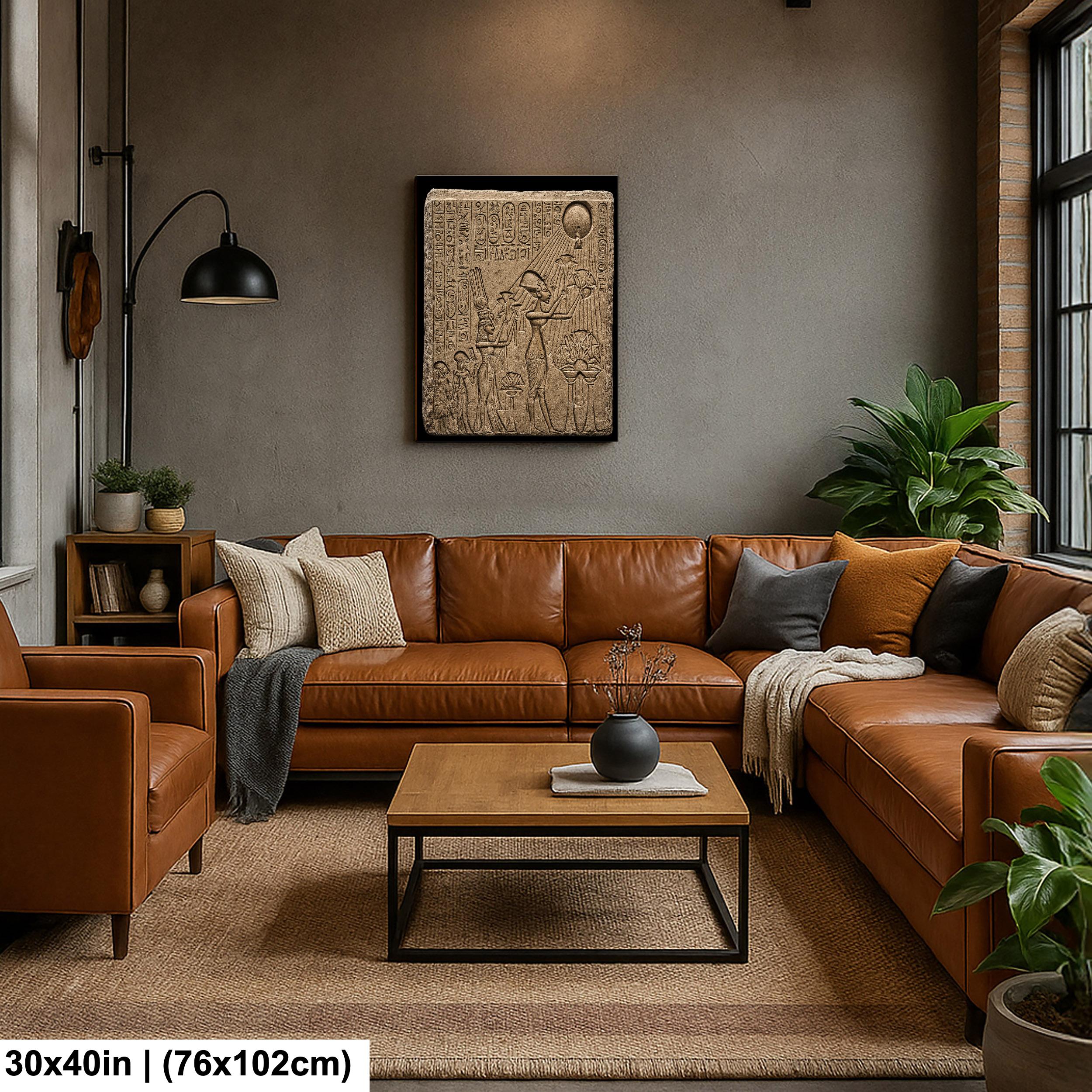
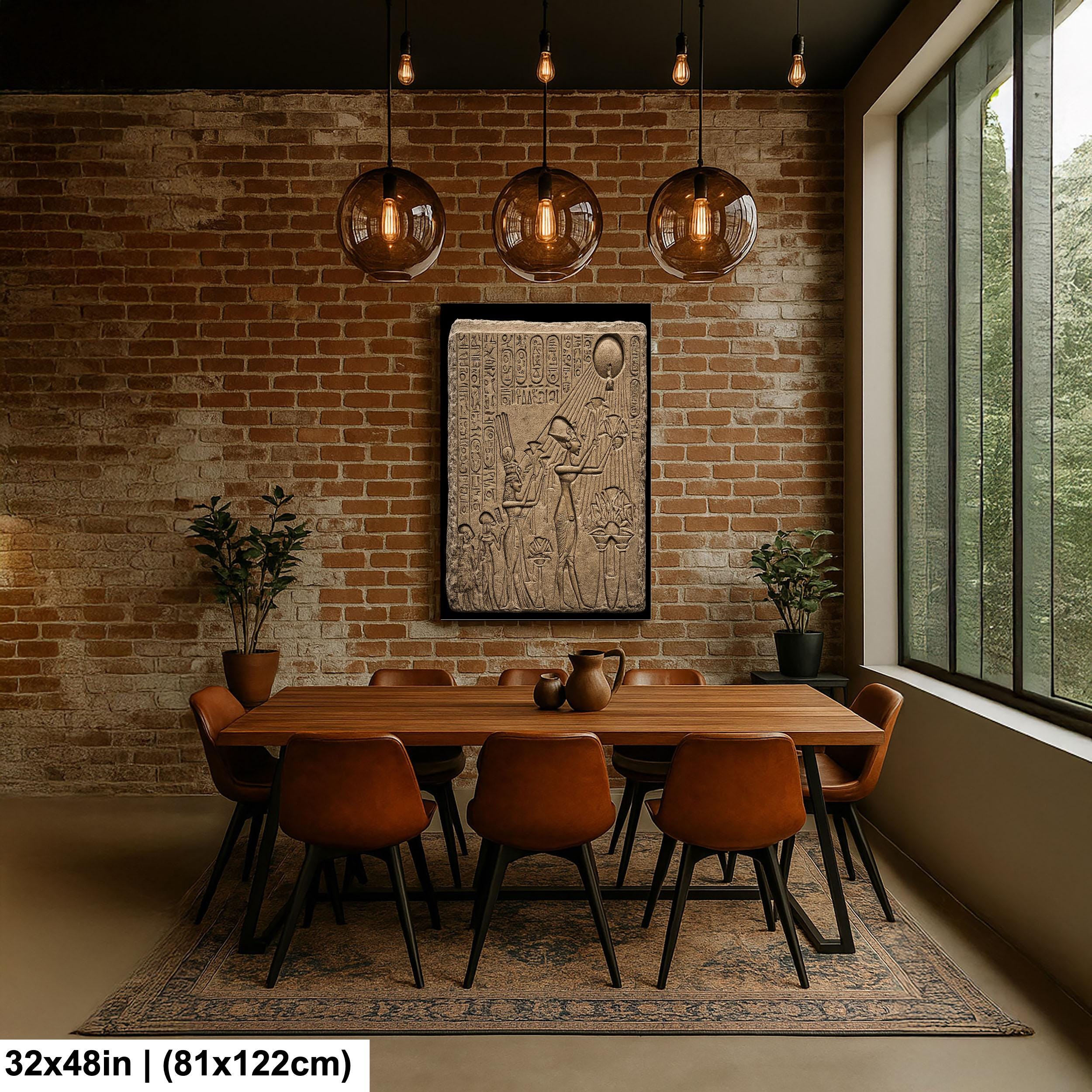
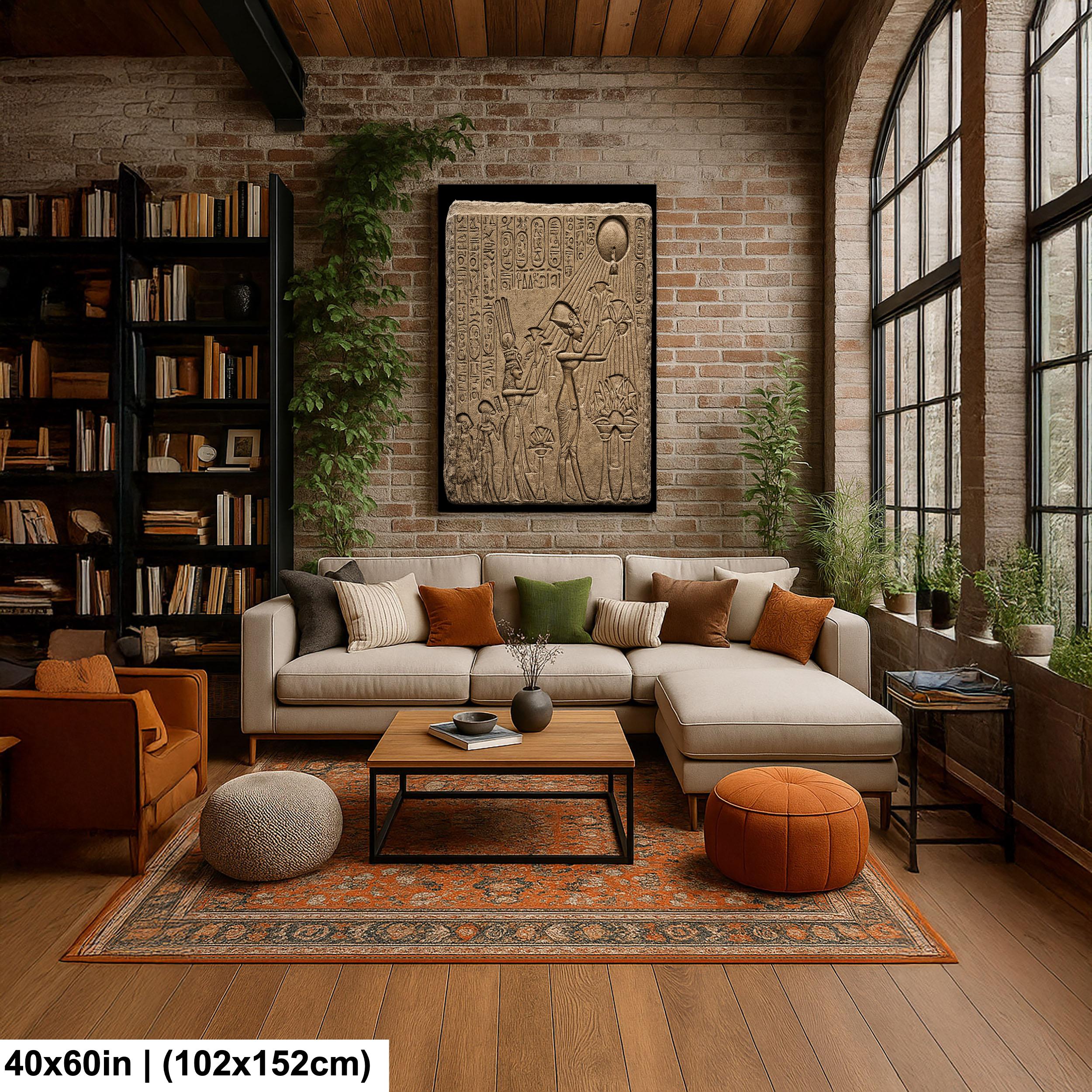
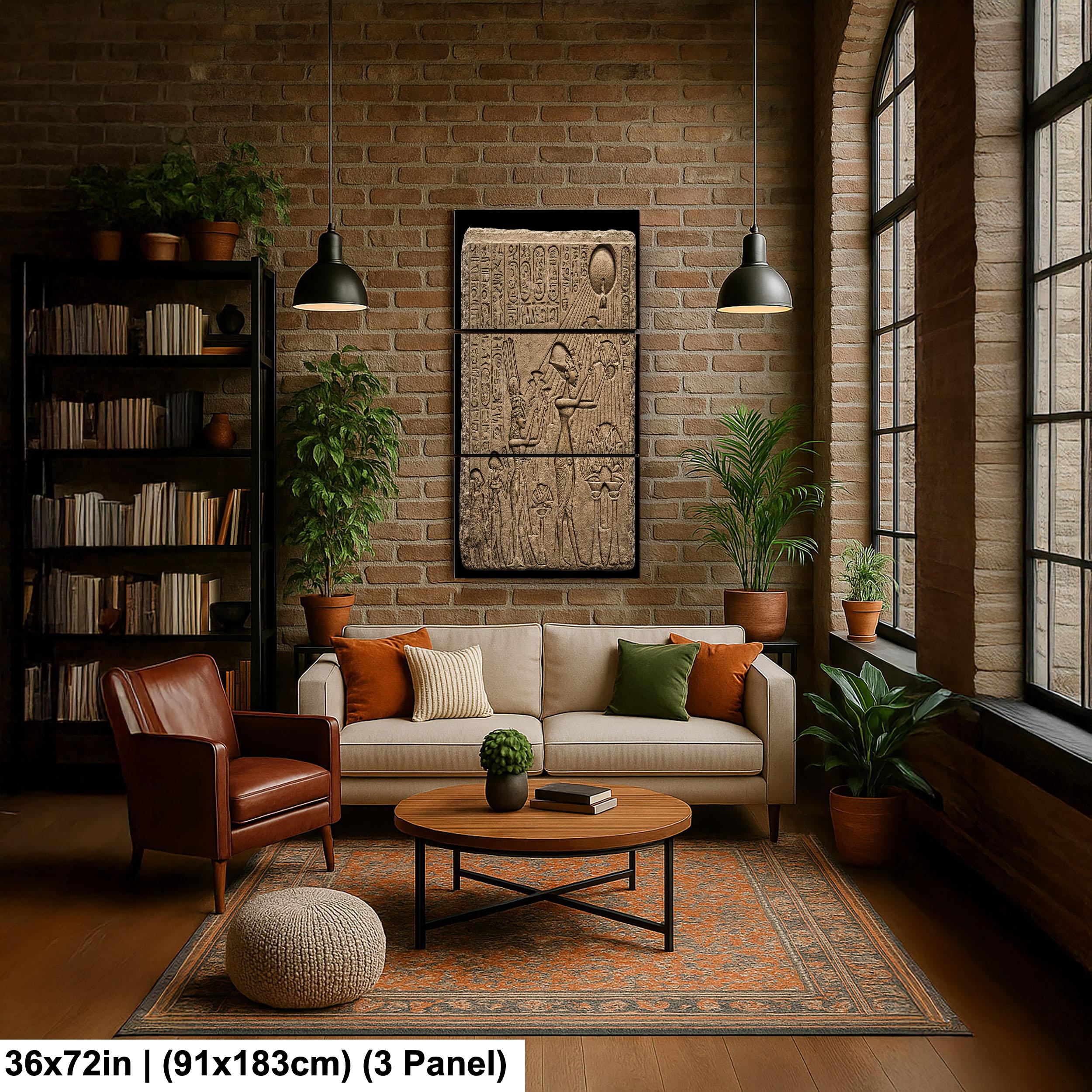
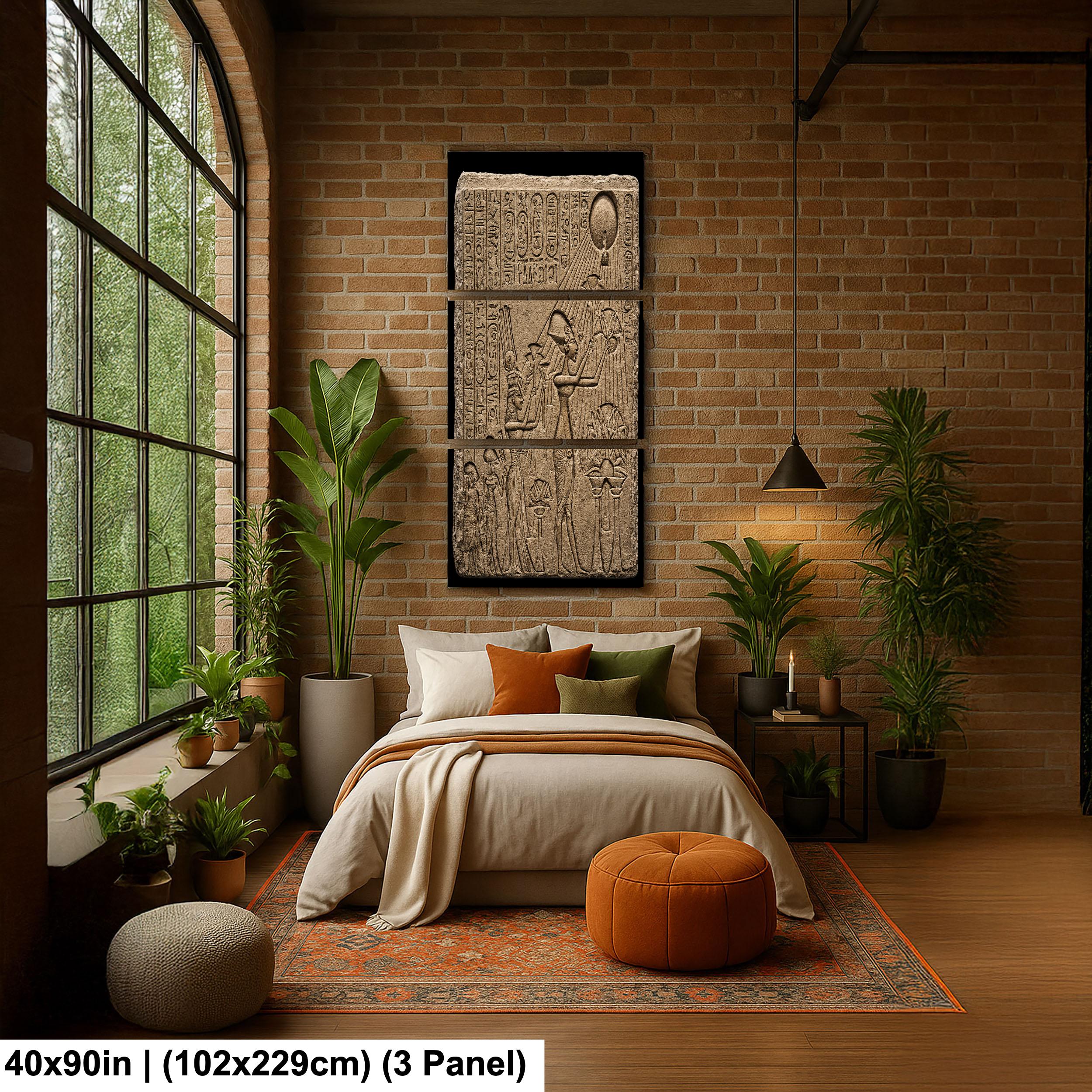
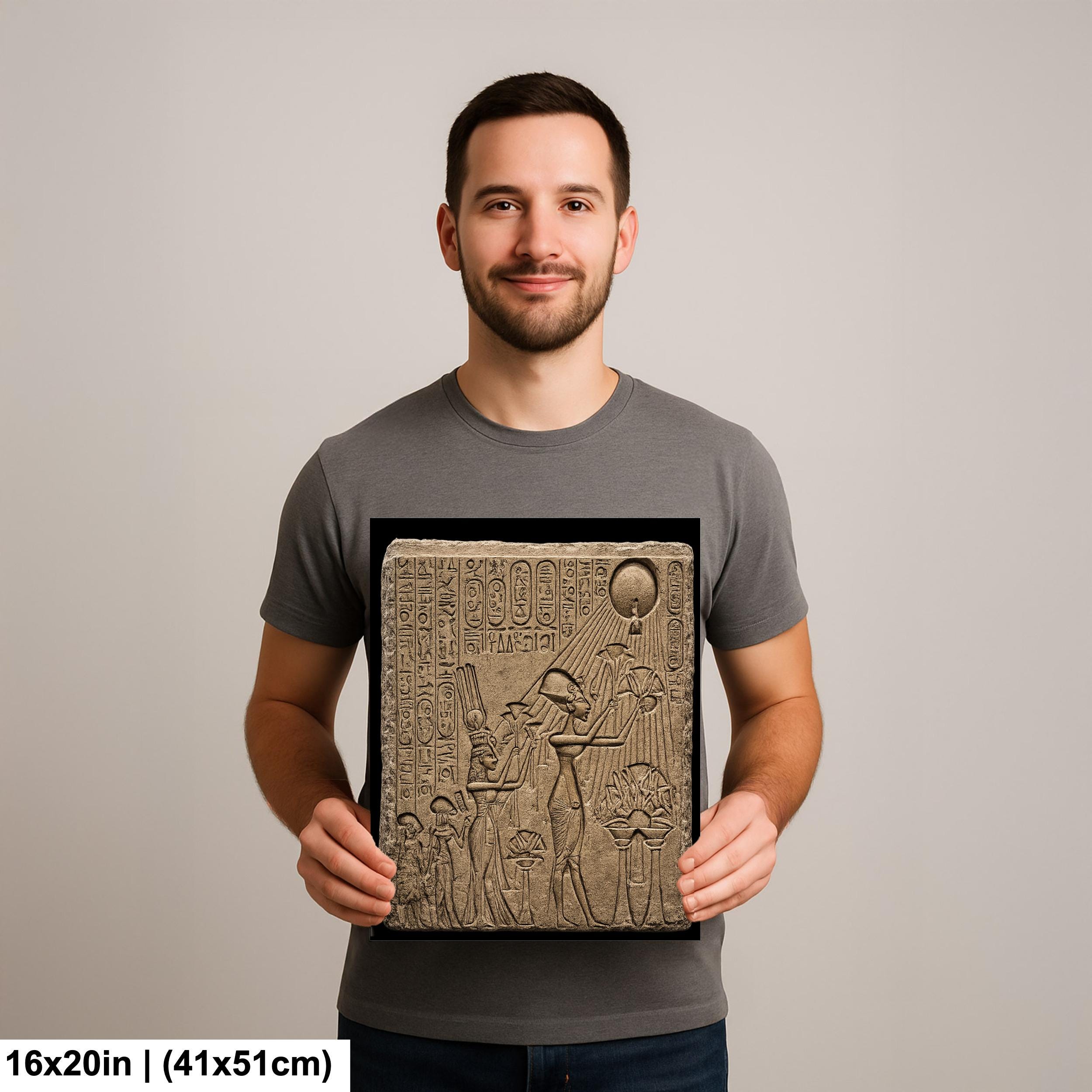
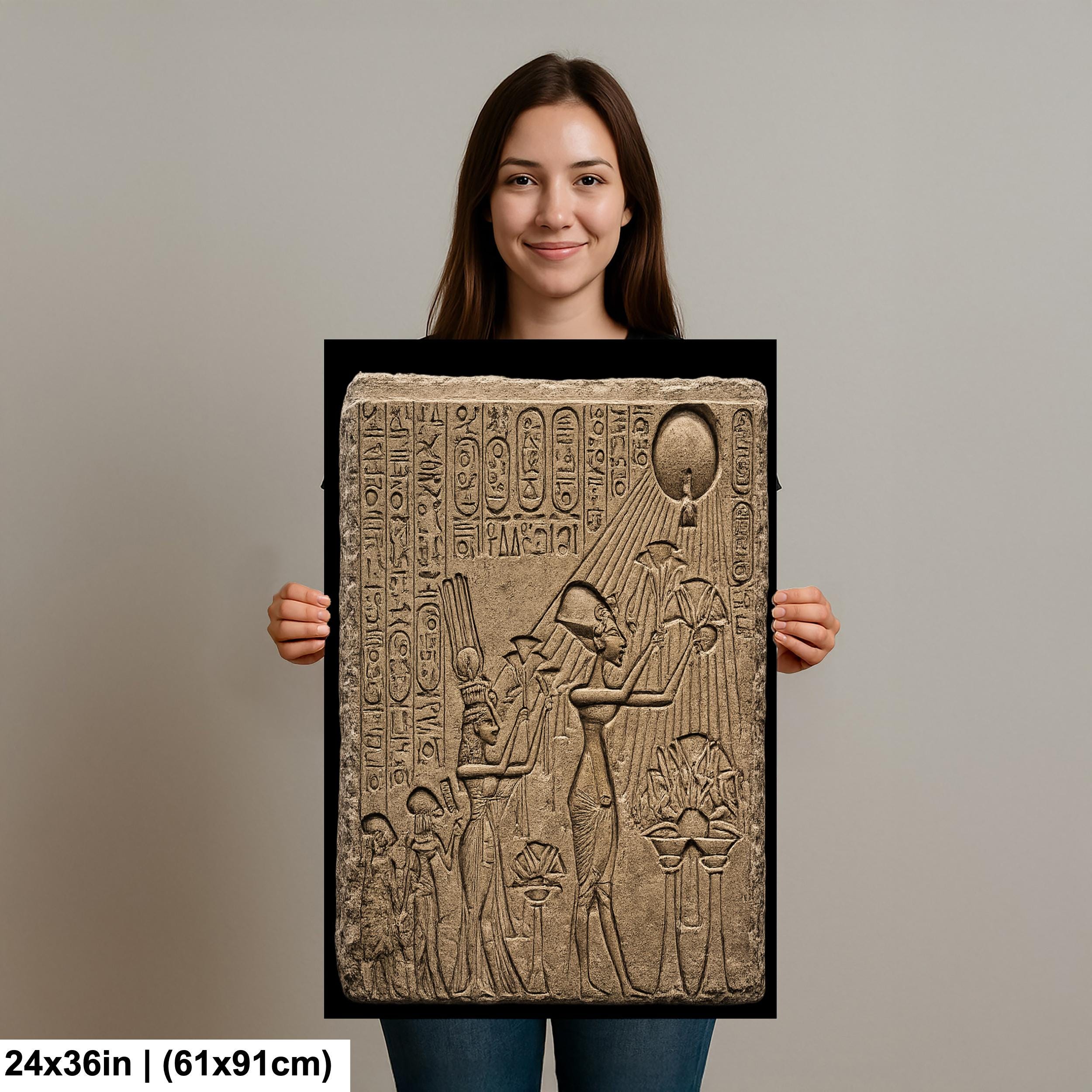
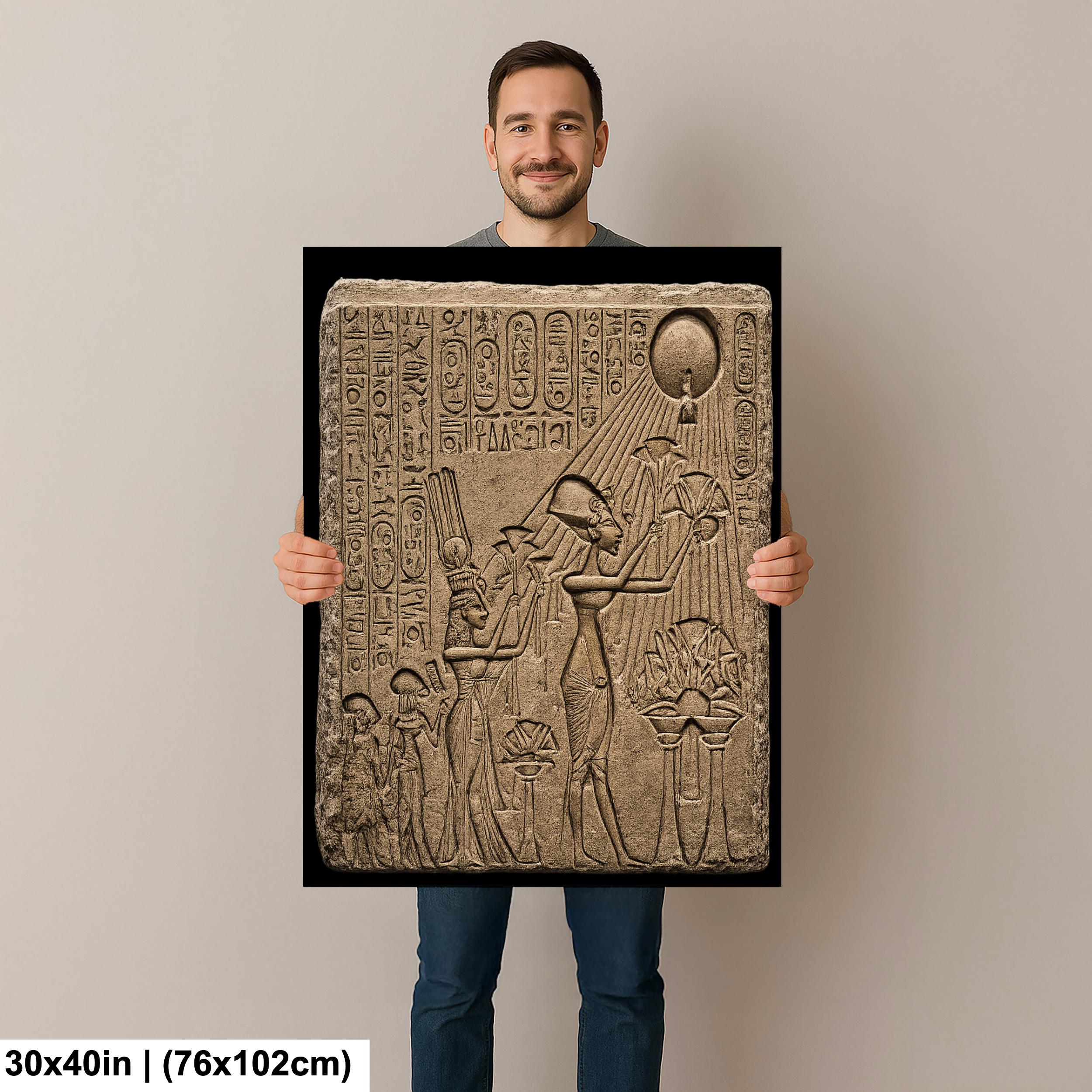
This relief captures a moment where divinity is not distant, but reaching—literally—down from the sky.
At the center stands Akhenaten, offering to the radiant disk of Aten. From the sun, elongated rays extend outward, each ending in finely carved hands. Some of these hands hold the ankh, the ancient Egyptian symbol of life. Here, the ankh is not symbolic alone—it is being given, placed at the breath of the royal family, signifying that life itself flows directly from Aten into their bodies.
Akhenaten is depicted wearing a royal headdress—often a form of the khepresh (blue crown) or a stylized royal covering associated with kingship. This headpiece is more than regalia; it signals his role as the living embodiment of divine authority on earth. In the Amarna period, his identity goes even further—he is not just chosen by the god, but uniquely connected to Aten as the sole intermediary between heaven and humanity.
Behind him stands Nefertiti, equally powerful in presence. She is often shown wearing her iconic flat-topped blue crown, a distinctive headdress that sets her apart from all other queens in Egyptian art. This crown is a visual declaration of her elevated status—suggesting not only royal authority, but a near-equal participation in divine ritual. In some interpretations, her crown mirrors the king’s authority, reinforcing the idea of a balanced, unified force of creation between them.
Below and beside them are smaller figures—royal children—most often understood to be their daughters, including Meritaten, Meketaten, and Ankhesenpaaten. They wear the sidelock of youth, a traditional symbol in Egyptian art that identifies them as children of royal blood. These daughters are shown receiving the same life-giving rays of Aten, emphasizing that divinity extends through the entire royal lineage.
Some interpretations suggest that one of these children could represent Tutankhamun, known in this period as Tutankhaten. While this remains uncertain, it reflects the transitional nature of the time—a future king possibly present within a world still devoted to Aten. Most scholars, however, identify these figures as the royal daughters based on their consistent depiction and known family structure.
Interwoven into the imagery is the lotus flower, a symbol deeply tied to the rhythm of life in ancient Egypt. Closing at night and opening with the rising sun, the lotus represents rebirth, renewal, and the eternal cycle of creation. Its presence echoes the daily return of Aten, reinforcing the idea that life is continuously regenerated through light.
Together, every element in this carving speaks a unified language:
• The ankh: life, given directly from the divine
• The lotus: rebirth and the eternal cycle of the sun
• The headdresses: authority, identity, and divine legitimacy
• The royal family: living vessels through which that life flows
This is not simply a scene of offering—it is a declaration of belief. A moment in history when the sun was not only worshipped, but understood as the very source of breath, renewal, and royal power itself.
This one stone is very significant as it represents the brief Amarna period in Egyptian history which was roughly 1353–1336 BCE, during the reign of Akhenaten. It was a moment in ancient Egypt when everything changed.
A young pharaoh, Akhenaten, looked beyond the temples filled with countless gods and chose a different path—one that would challenge centuries of belief. He turned instead to a single force in the sky: Aten, the radiant disk whose light touched all things equally.
In devotion to this new vision, he built an entirely new city—Amarna—rising from the desert as a place where the horizon itself honored the sun. Here, religion was no longer hidden in dark inner sanctuaries. It lived in open air, beneath the sky, where Aten’s light could fall directly upon the people and their king.
But revolutions, even those written in stone, do not always last.
After Akhenaten’s death, the world he created began to fade. The old gods returned. His city was abandoned. His name, in many places, was erased. Even the young king Tutankhamun, once named in honor of Aten, would restore the traditions that came before.
And yet, fragments remain.
Carvings like this one still carry the memory of that extraordinary time—a brief chapter when Egypt turned toward a single light, and believed it to be the source of all life.
Amarna is quiet, almost forgotten compared to Egypt’s more famous sites. That’s part of its story:
• After Akhenaten died, the city was abandoned within a generation
• His religious revolution was reversed
• The site was left to the desert, preserving it in a kind of suspended history
Amarna today is a desert archaeological site in Middle Egypt—once a bold, short-lived capital built for the worship of the sun, now a quiet landscape holding the remains of that revolution.
___________________________________________________________________Museum-Quality Fine Art Print
Professionally printed using archival inks
Premium fine art paper (or specify the paper if you use a particular type)
Rich color and exceptional detail
Carefully prepared from the original high-resolution image
Made to last for generations with proper care
Archival quality
Fade-resistant inks
Professional printing
Ready for framing (if applicable)
Made from Patricia Mezzina's original photograph
-----------------------------------------------------------------------------------------------------____________________________________________________________
Production and Shipping Times: 5-7 Business Days
• Premium Photo Paper: 5 days for printing, 5 days for shipping.
• Ready-to-Hang Canvas: 5 days for printing, 5 days for shipping.
Material Details
We offer five exceptional ways to print your images, each designed to suit your style and needs.
1) Premium Photo Paper
• High-quality, professional-grade photo prints with sharp, vivid, and rich colors.
• Feels like you’re right there in the scene.
• Long-lasting, durable prints available in sizes 8x10, 11x14, 16x20, and 24x36 inches.
• Designed to be placed in a glass frame, which you can purchase separately (affordable options start at just a few dollars at Target or online).
2) Ready-to-Hang Canvas
• Convenient and ready to display right out of the box—no assembly required!
• Stunning, finished look with a polished aesthetic.
• Made with 0.75 or 1.5-inch wooden stretcher bars (depending on size) for a sturdy, professional feel, similar to traditional oil paintings.
• Sides are clean and free of staples or visible lines, ensuring a seamless appearance.
• Estimated total production and delivery time: 10 days.
3) Ready-to-Hang Canvas (Split into 3 Panels)
• Perfect for large statement pieces.
• The image is divided into three equally sized canvas panels, creating a modern, dynamic look.
• Ideal for showcasing spectacularly large artwork while adding depth and interest to your walls.
4) Aluminum Metal Prints
• Elegant and exclusive high-end aluminum prints that shine with a modern touch.
• 3/64” thick aluminum panels with a glossy finish and rounded edges for a sleek, polished look.
• UV-resistant ink protects against fading, ensuring long-lasting vibrancy.
• Ready to hang right out of the box for ultimate convenience.
5) Acrylic Prints
• Modern and eye-catching, these prints offer incredible vibrancy and depth.
• Made with 1/8” thick, museum-quality acrylic that refracts light beautifully, enhancing your image with brilliant color and clarity.
• UV-resistant ink ensures your photo stays stunning over time.
• Ready to hang immediately, with no extra setup required.
Choose the printing option that fits your style and bring your favorite images to life!