
There are trips that give you beautiful photographs.And then there are journeys that change the way you see the world.In the spring of 2025, I set out on one of those journeys—a 23-day passage through Vietnam, Cambodia, and Thailand, carrying my camera and the familiar anticipation that comes whenever I arrive somewhere completely unknown.I thought I was traveling to photograph Southeast Asia.What I discovered was a story far bigger than anything I could capture in a single frame.
Vietnam — Where the Journey Began
My first glimpse of Southeast Asia came in Hanoi, a city where centuries of history seem to exist alongside the rhythm of everyday life.I walked through the narrow streets of the Old Quarter, past markets and storefronts, motorbikes and food stalls. I visited the Temple of Literature, founded nearly a thousand years ago, and stood before the Ho Chi Minh Mausoleum, the One Pillar Pagoda and the remnants of Vietnam's complicated modern history at Hoa Lo Prison.As a photographer, Hanoi was almost overwhelming.Everywhere I turned there was another story: a face in a market, an old doorway, incense curling through a temple, a motorbike disappearing into a crowded street.Then the city gave way to water.At Ninh Binh, I climbed into a small rowboat and traveled through a landscape of villages, caves, temples and towering limestone formations. It was quieter here. The frantic pulse of Hanoi disappeared, replaced by the sound of oars dipping into the water and the extraordinary landscape unfolding around us.And then came Ha Long Bay.We boarded a traditional junk boat and sailed into a world that hardly seemed real—limestone islands rising from glistening water, fishing villages tucked among the formations, caves hidden within the rock.That night, I slept aboard the boat surrounded by the bay.Morning came quietly. Tai Chi on deck, breakfast on the water, and island after island appearing through the distance as we continued our journey.It was one of those places where a photographer eventually has to lower the camera.Some things need to be remembered with more than a photograph.
Ho Chi Minh City — Layers of a Complicated Past
From the stillness of Ha Long Bay, I traveled south to Ho Chi Minh City.Here, French colonial architecture stands among temples, markets and the movement of a modern metropolis. I photographed and explored places including the Opera House, Notre Dame Cathedral, the Central Post Office, Chinatown, Thien Hau Temple and Ben Thanh Market.But throughout Vietnam, history is never very far away.Travel has taught me that the most meaningful places aren't always the easiest ones to visit. Sometimes we travel not simply to admire what is beautiful, but to understand what happened before us.That lesson became even more powerful when I crossed into Cambodia.
Cambodia — Bearing Witness
The road from Ho Chi Minh City carried us across the border and into Phnom Penh.Nothing quite prepared me for what came next.At the Tuol Sleng Prison Museum and the Killing Fields of Choeung Ek, the journey became something entirely different.This wasn't a place for chasing the perfect photograph.It was a place for listening.For remembering.For bearing witness.The sites preserve the devastating history of Cambodia under the Khmer Rouge, and walking through them was a sobering reminder of how quickly ordinary lives can be swept into unimaginable tragedy.There are moments in travel when the photographer in me becomes secondary to the human being standing behind the camera.This was one of them.
Angkor — Where Stone and Jungle Meet
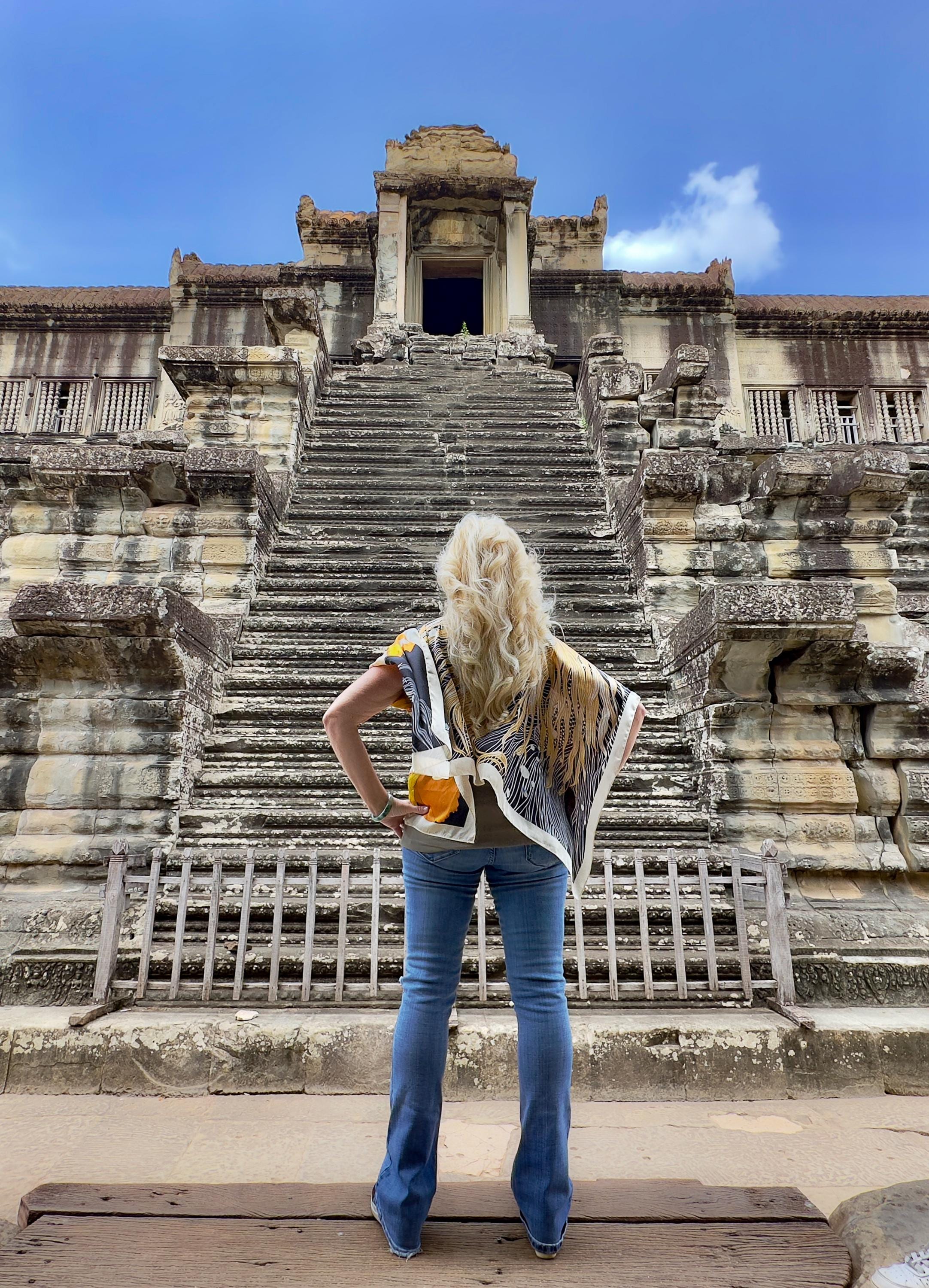
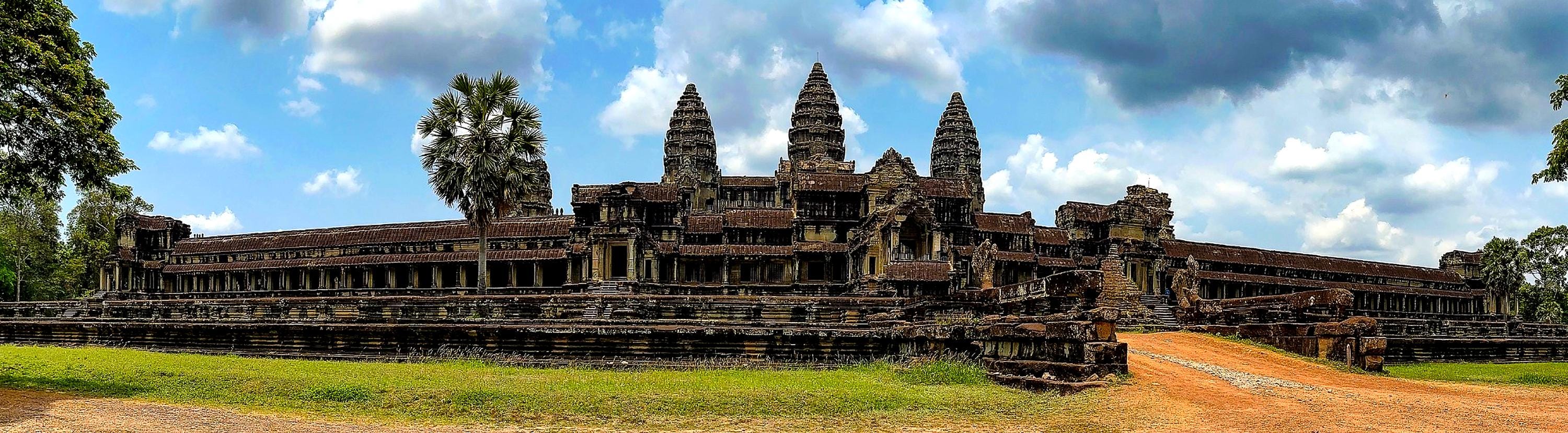
From Phnom Penh, I continued north to Siem Reap, gateway to one of the places I had dreamed of photographing: Angkor.Nothing truly prepares you for its scale.At Angkor Thom, the enormous stone faces of Bayon seemed to watch silently over the ancient city. I explored Baphuon and the terraces before entering Ta Prohm, where enormous tree roots have wrapped themselves around centuries-old stone.Nature and architecture have become inseparable there.And then came Angkor Wat.The great towers I had seen countless times in photographs finally stood in front of me.Built centuries ago and still carrying extraordinary spiritual significance, Angkor Wat is one of those rare places where history feels almost tangible. As the light changed over the temple, the stone seemed to change with it.Nearby, I also explored Banteay Srei, the remarkable red sandstone temple known for its intricate carvings, and Banteay Samré, another surviving testament to the civilization that once flourished here.But one of my most personal experiences in Cambodia happened away from the monumental temples.At Wat Damnak, monks performed a traditional blessing ceremony. Sitting on a mat as prayers were chanted and holy water poured over me was a quiet, deeply human moment. A sacred thread was tied around my wrist—a traditional symbol of protection.Later, I traveled by boat onto Tonle Sap Lake, passing a floating community where homes, schools, gardens and even spirit houses exist on the water.It was another reminder that the photographs I value most are rarely just pictures of places.They are photographs of how people live within those places.
Thailand — Gold, Markets and the Sea
From Cambodia, I flew to Bangkok, and suddenly the visual world changed again.Bangkok seemed to shimmer.At Wat Traimit, I stood before the extraordinary Golden Buddha. At Wat Pho, the enormous Reclining Buddha stretched more than 150 feet through the temple. And at the Grand Palace and Wat Phra Kaew, Thailand's extraordinary craftsmanship appeared in gold, mirrored surfaces, intricate roofs and brilliant color.Then there were the markets.At Mae Klong, vendors sell their goods directly beside—and on—the railway tracks. When the train approaches, awnings disappear and baskets are pulled away, only to return moments after the train passes.From there, I traveled by boat through the canals toward the floating market of Damnoen Saduak, another glimpse into a way of commerce shaped by water.After weeks of cities, temples and history, the final chapter of the journey led south.To the sea.
Phuket — Returning to the Water
I arrived in Phuket, where rainforest-covered hills descend toward tropical water and white-sand beaches.For me, ending the journey beside the ocean felt appropriate.The sea has always been where I feel most at home.From Phuket came the extraordinary island landscapes of southern Thailand—the limestone cliffs, hidden lagoons, caves and turquoise water that make this part of the world instantly recognizable. The itinerary opened the door to places such as the Phi Phi Islands, Pileh Lagoon and the dramatic seascapes of Phang Nga Bay and James Bond Island.After weeks of photographing ancient temples, crowded streets, markets, rivers and cities, I found myself once again looking through my camera at the natural world.Water.Light.Stone.Sky.Perhaps that is why the final days felt less like the end of a trip and more like coming full circle.
What Remains
Twenty-three days.Three countries.Ancient kingdoms and modern cities. Buddhist temples and colonial architecture. Floating villages and crowded markets. Places of breathtaking beauty and places preserving memories of terrible human suffering.And thousands of photographs.But when I think about this journey now, I don't remember it as a collection of destinations.I remember moments.The quiet movement of a rowboat through Ninh Binh.Limestone islands appearing across Ha Long Bay.Standing silently in Phnom Penh.Tree roots swallowing the stones of Ta Prohm.The first time I saw the towers of Angkor Wat.A monk tying a sacred thread around my wrist.Gold shimmering inside Bangkok's temples.A train passing within inches of a crowded market.And finally, the warm waters of Thailand stretching toward the horizon.Photography gives me an excuse to travel slowly enough to notice these things.The camera encourages me to look closer—to wait for the light, watch people move through a place, notice the details carved into an ancient wall, and sometimes recognize when the most important thing I can do is simply put the camera down and experience where I am.I left home hoping to photograph Southeast Asia.I returned with something much more valuable:a deeper understanding of how much history, beauty, resilience and humanity can exist within a single journey.And that is why I travel.Not simply to see the world.But to bring a little piece of it home through my lens.Patricia Mezzina Wildlife & Travel Photographer